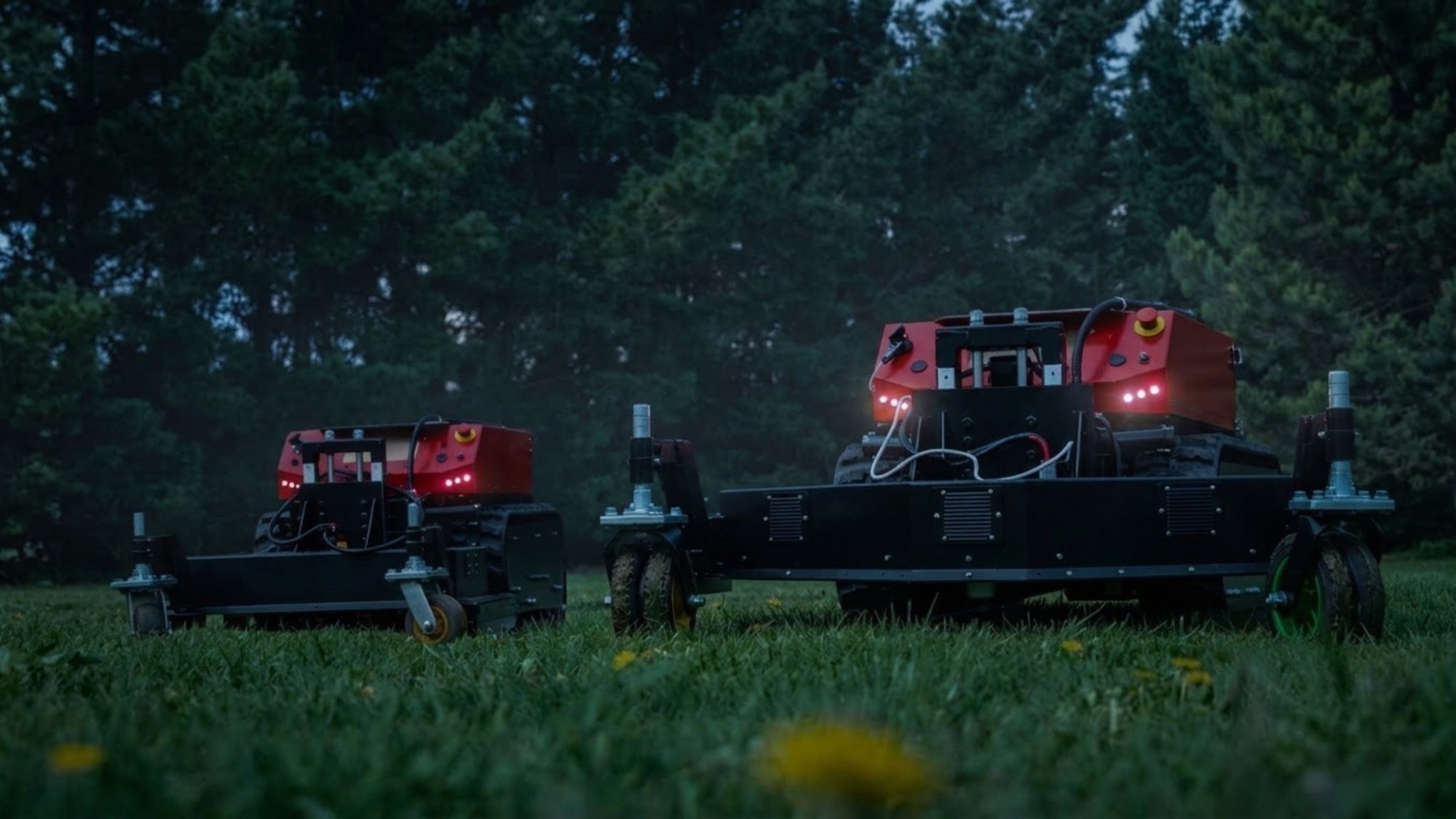
Mows what othermachines can’t.
A tracked, electric mowing robot for tall grass, woody scrub and steep ground. Change the cutting deck in the field. Change the battery in under a minute.
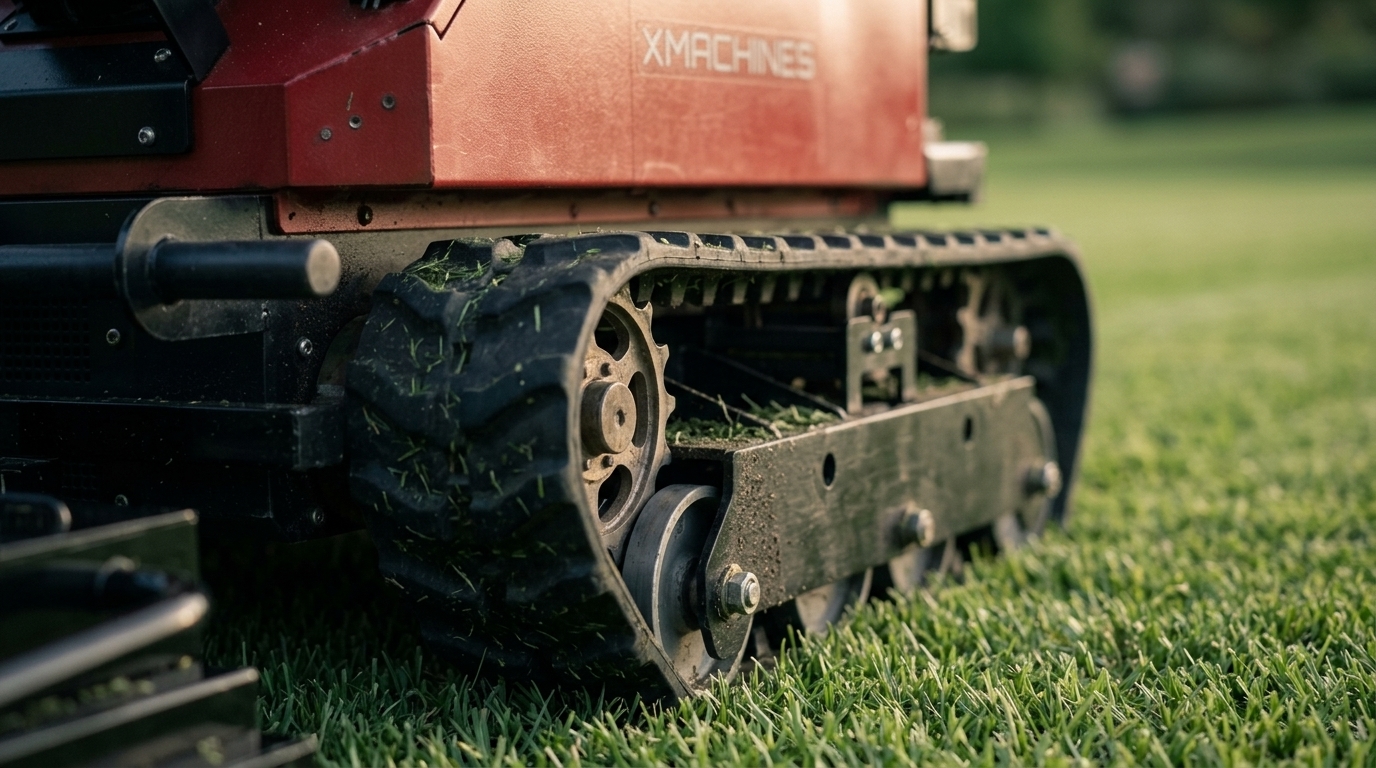
One robot for the jobs crews struggle with.
Overgrowth, steep banks and under-panel rows are slow, tiring and risky to cut by hand. X150 Blade takes on that work so your crew doesn’t have to.
Cuts the tough growth.
Four interchangeable decks handle everything from tall grass to woody saplings. Pick the deck that fits the growth, not a different machine.
Goes where crews shouldn’t.
Tracks and low ground pressure take it up 35° slopes, across mud and under solar panels — ground that is unsafe or slow to work on foot.
Keeps working.
Electric, with hot-swappable batteries. A charged pack goes in within a minute, so the machine keeps cutting instead of waiting to charge.
Autonomous when you want it.
Optional mode with mapped routes, obstacle avoidance and automatic return-to-charge, run from a smartphone. The hardware is ready from day one.
Match the deck to the growth.
Decks swap in the field, not the workshop. Each one changes the cutting geometry — blade type, tip speed, discharge — while the chassis, batteries and control stack stay exactly the same.
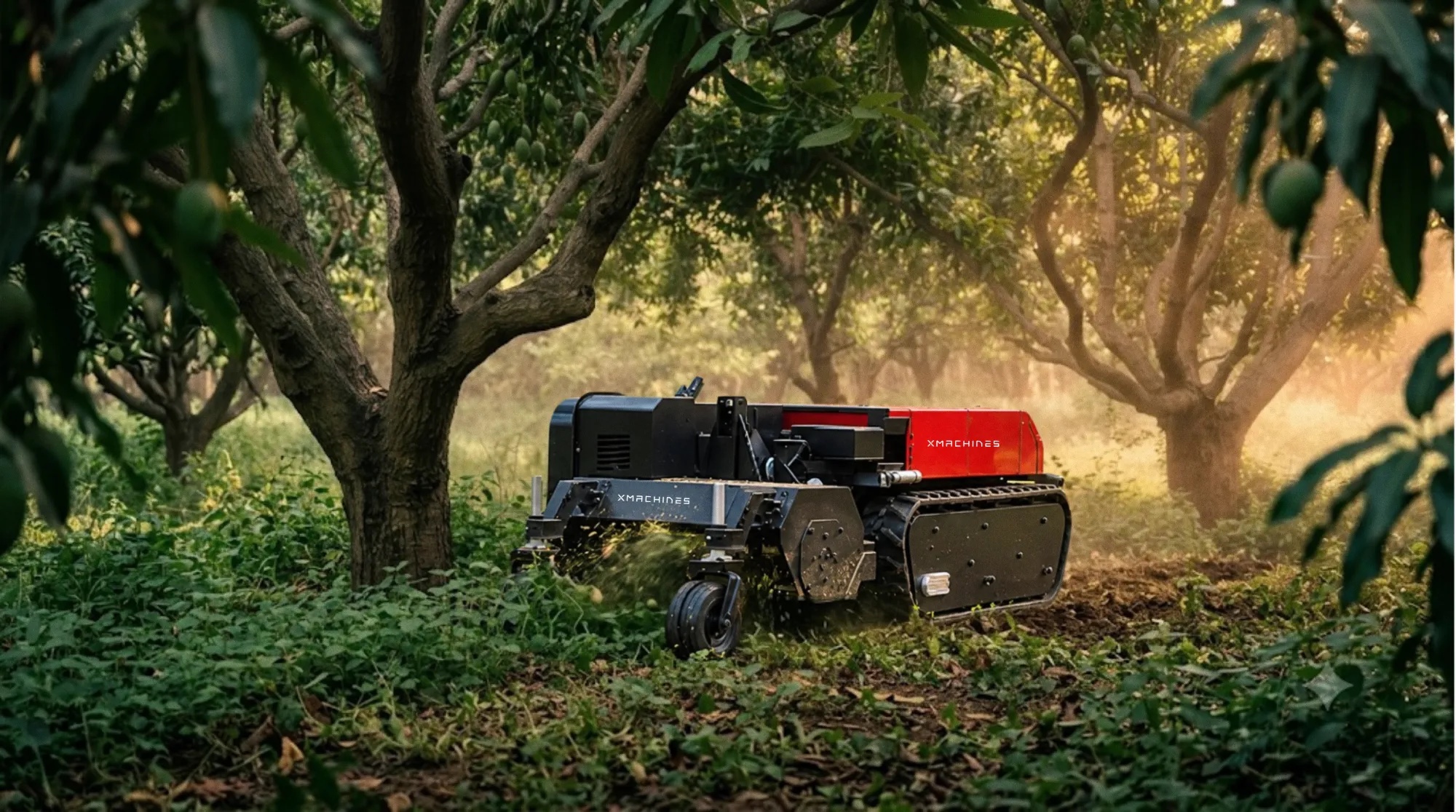
Flail deck
Free-swinging blades hinge back on impact instead of stalling, so tall grass and light brush feed through at a constant load. Cut material is re-cut on the way out and drops as a fine mulch rather than a windrow.
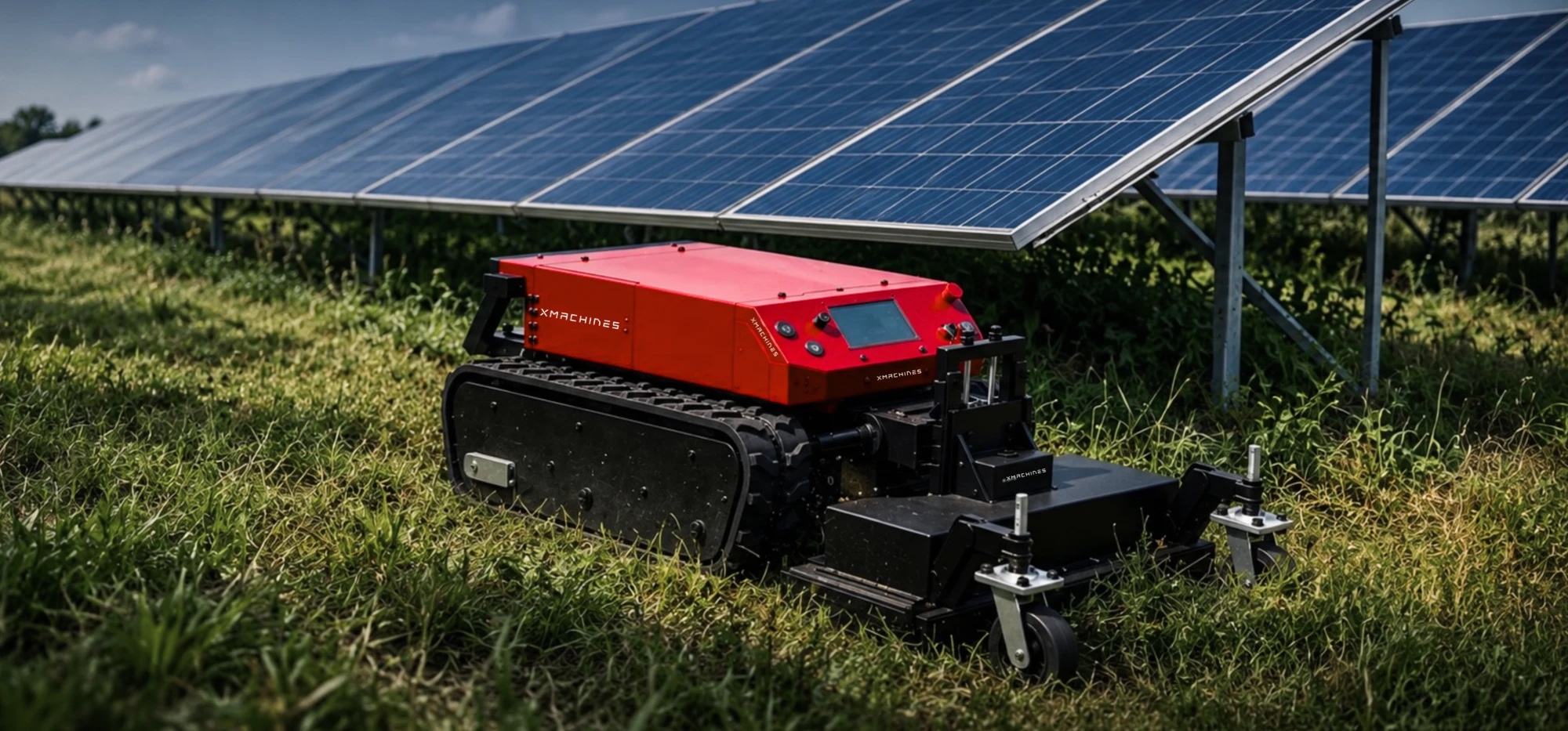
Rotary deck
A wide single-plane rotary blade running at high tip speed for fast, even cutting across open, maintained ground. The widest working width of the four decks, and the fastest pass on ground that is already under control.
Slopes, mud, tight spaces — the ground crews avoid.
Grade, soft ground and obstacles decide whether a site gets cut. The tracked drive moves those limits.
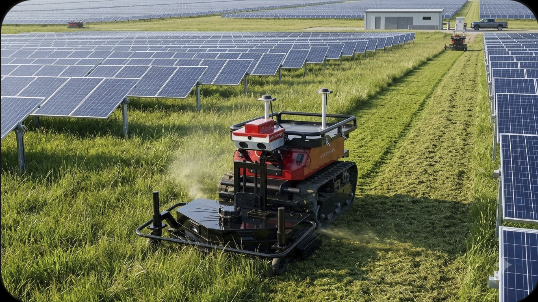
Steep slopes
Tracks hold traction on graded ground where wheels lose grip.
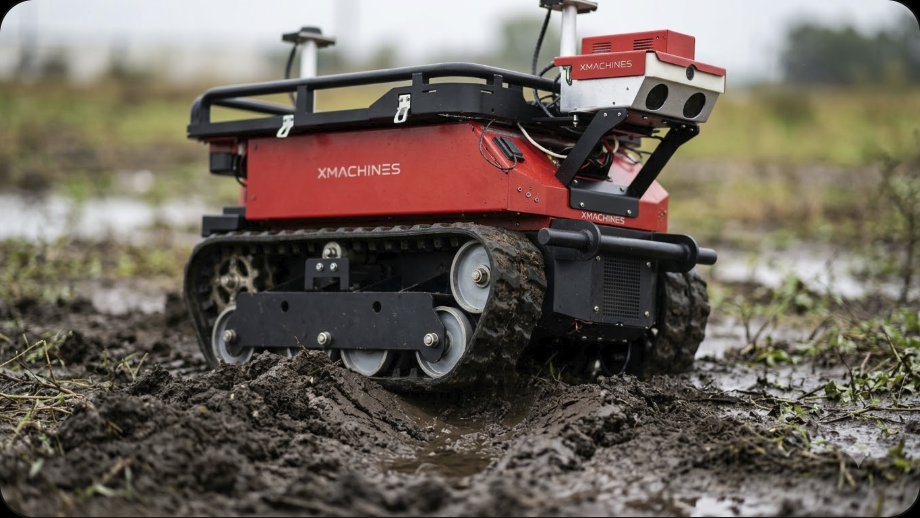
Mud & soft ground
Weight spreads across the full track, so it keeps moving without rutting.
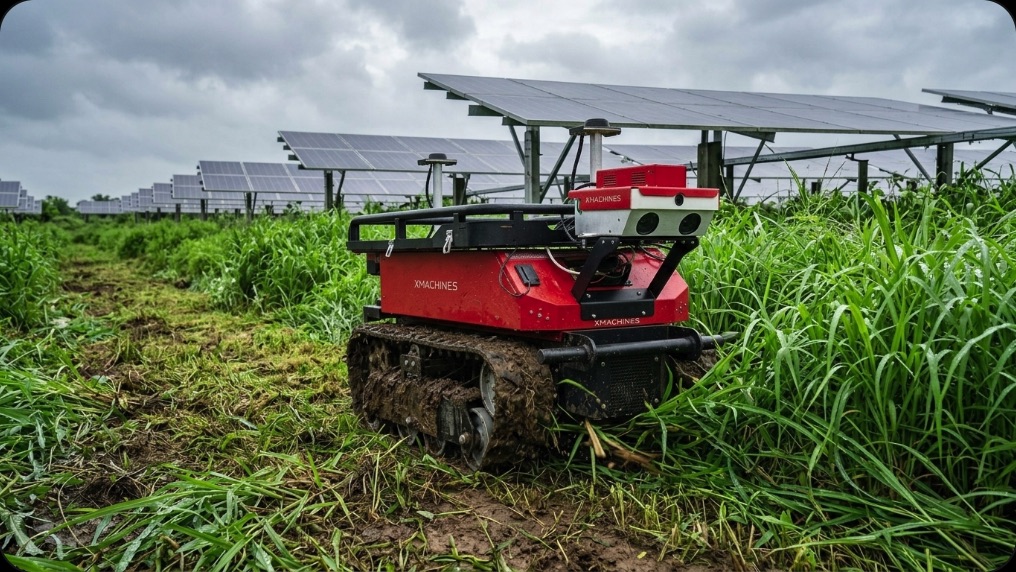
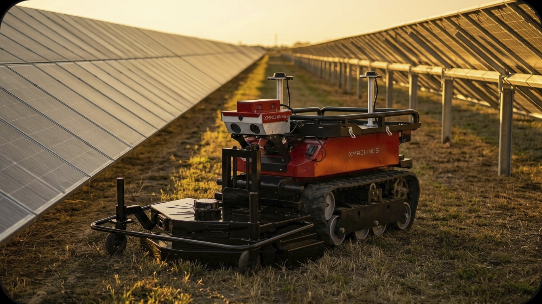
Under solar panels
A low profile clears fixed-tilt arrays in a single pass with no panel strike.
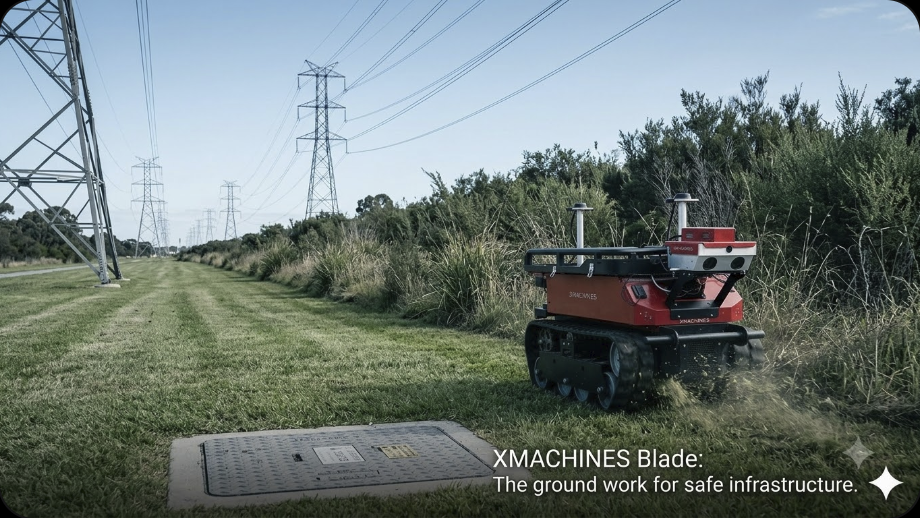
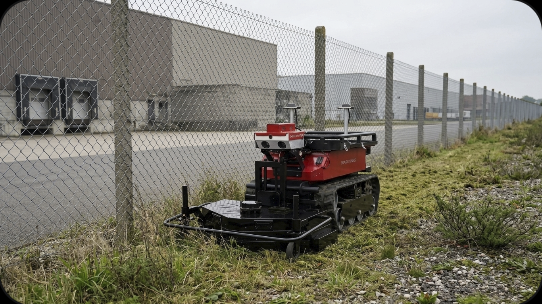
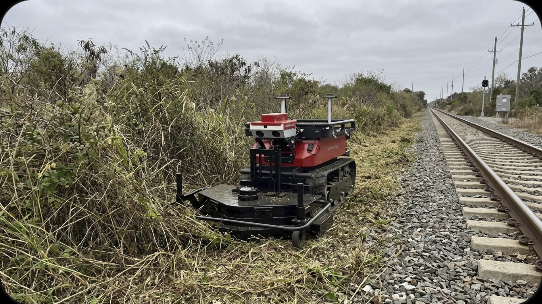
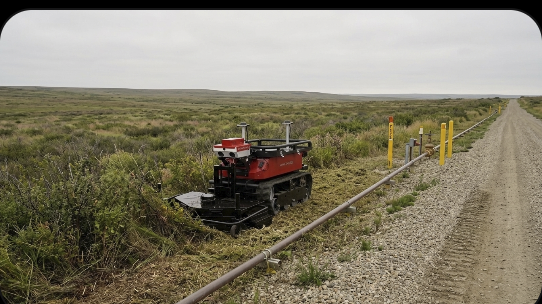
Roadside corridors
Holds a steady line along long, continuous stretches of verge.
Electric, always on the job, easy to manage.
No fuel, no long charging breaks, and a clear view of every machine on site.
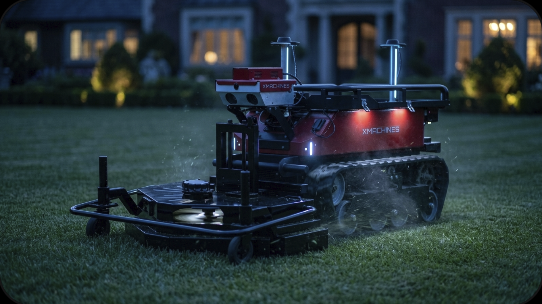
Fully electric
No fuel, no exhaust, no refuelling run to the far side of the site. Power arrives as a charged pack.
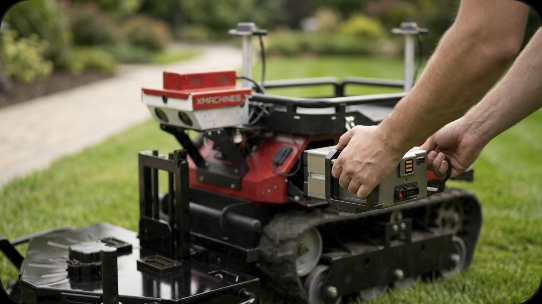
Swappable packs
A depleted pack comes out and a charged one goes in without powering the machine down or leaving the block.
Tracked drivetrain
Dual electric tracked motors spread load across the contact patch — slopes, mud and undulation without rutting the ground.
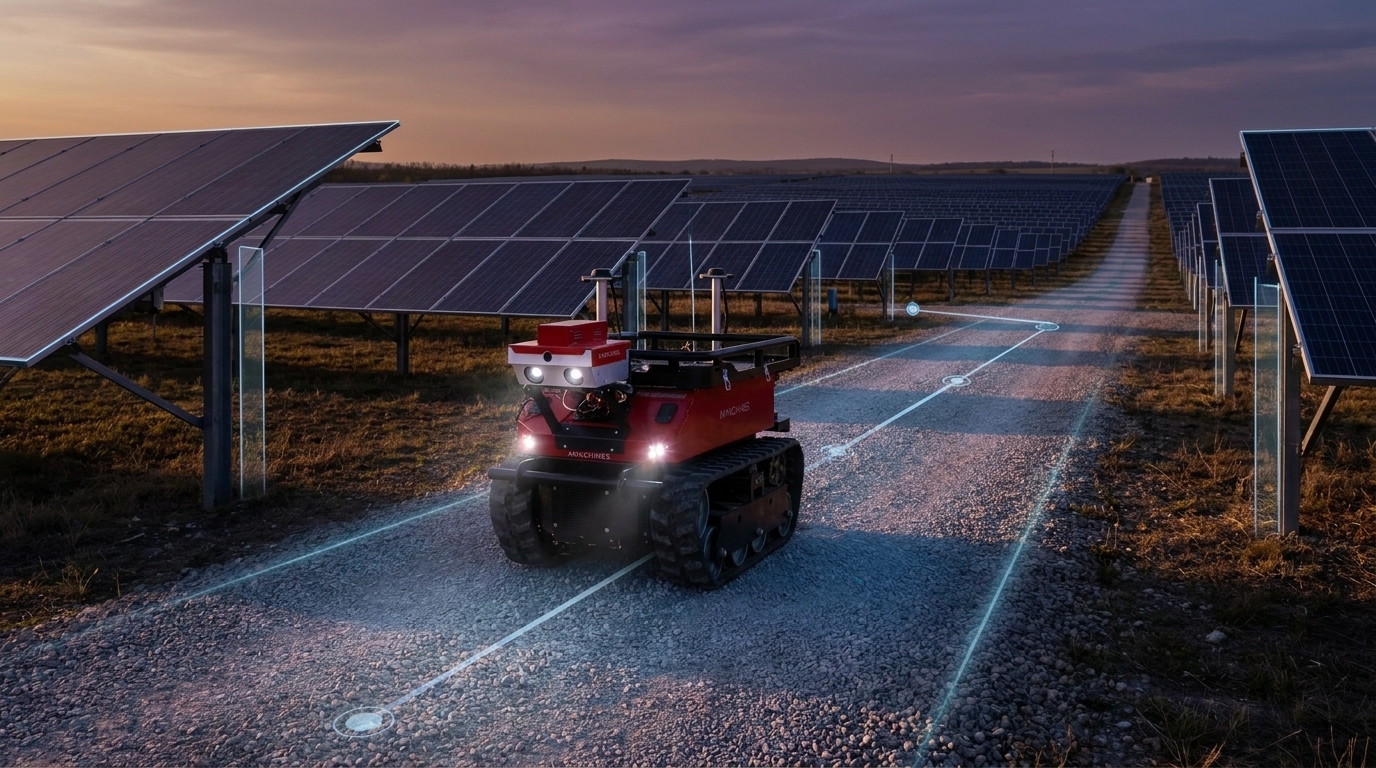
Optional autonomous mode
Mapped routes, obstacle avoidance and automatic return-to-charge, dispatched from a smartphone interface. Switch it on when the site is ready for it — the hardware already is.
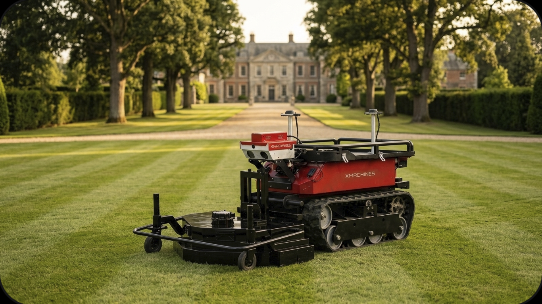
Low-noise operation
Quiet enough to work close to people and buildings, and to run outside the hours a combustion machine would be allowed.
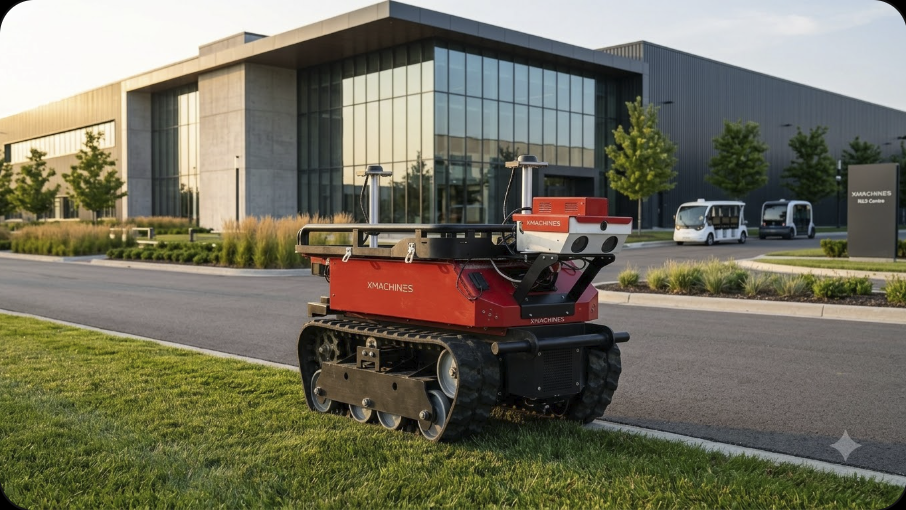
One platform, five kinds of ground.
X150 Blade, by the numbers.
Everything needed to plan X150 Blade onto your site — envelope, power, runtime, grade limit and how it connects back to the fleet.
From your site details to a working demo.
Three simple steps. No commitment to talk.
Tell us about your site
Share the grade, type of growth and how the ground is accessed.
Get a recommendation
We suggest the right deck, estimate runtime and outline a typical working week.
See it on your ground
Book a demo and watch X150 Blade work on your own terrain.
Talk to us about your ground.
Send us the site — grade, growth and access — and we’ll come back with a deck recommendation, a runtime estimate and what a working week looks like on it.